

The “Safe School Initiative”, introduced by the Federal Government to checkmate the rising wave of gunmen attacks on schools in the country, is gradually becoming impactful in some public schools in Abia and Imo.
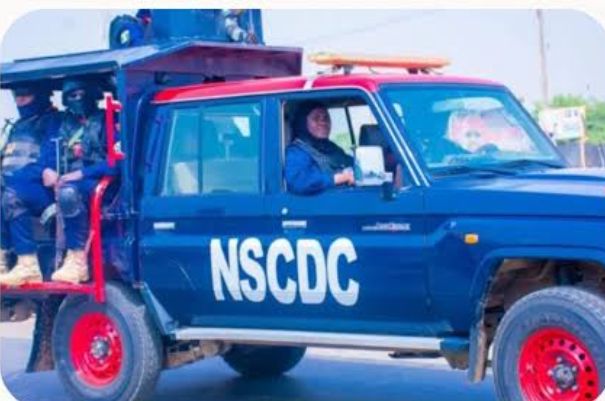
A survey conducted by the News Agency of Nigeria (NAN) in the two states showed that the Police and Nigeria Security and Civil Defence Corps (NSCDC) have commenced the deployment of personnel and security devices in some schools in the area.
In Abia, the state command of NSCDC said the initiative had taken off and was beginning to yield positive results, with no report of attacks since the deployment of personnel in schools.
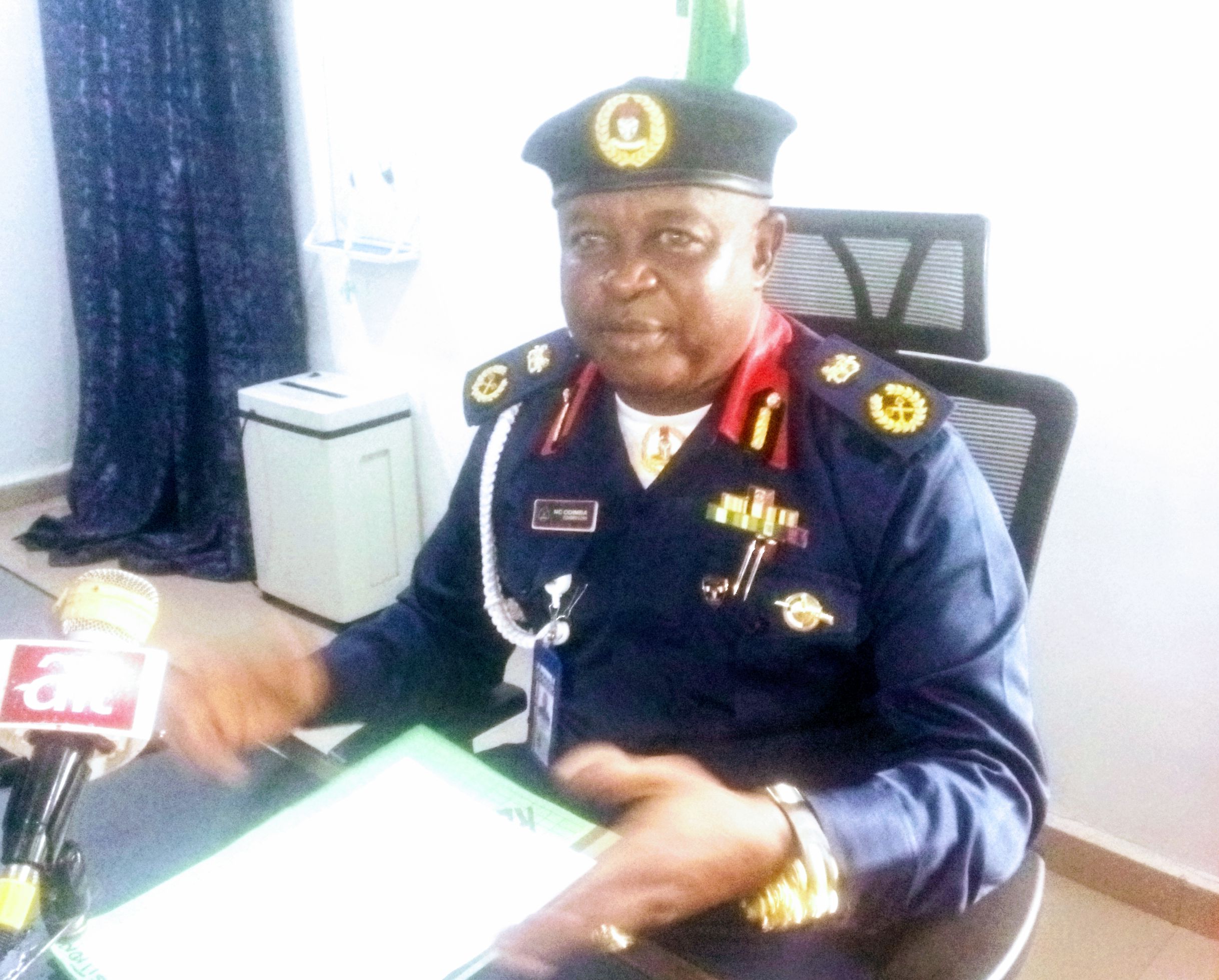
The Officer-in-Charge of the Safe School Unit, CSC Chinyere Umezurike, told NAN in Umuahia that the unit had deployed personnel to the three Federal Government’s Unity Schools in the state.
According to Umezurike, the mandate of the NSCDC, under the Safe School Initiative, rests on three pillars: intelligence gathering, stakeholder collaboration, and rapid response to threats.
“The first is gathering credible intelligence on anything that pertains to school crisis and the environment around the schools.
“The second is collaboration with other stakeholders in preventing school crisis.
“And the third is to respond actively to any attack that may occur,” she said.
Umezurike said the Abia command, under the leadership of Commandant Chukwuemeka Odimba, was carrying out patrols and sensitisation in state, private, and tertiary institutions.
“We equally do sensitisation visits to schools to educate both school users and the environment on what safe school security is all about,” she said.
She further said that the command had established a rapid response team and a female squad for school patrols.
“Safe school project helps to get the risk vulnerability of the school environment.
“We check if the school’s perimeter fencing is still intact, if their securities or guards are in line, and if pupils are not being assaulted,” Umezurike said.
She listed the institutions already covered by the corps to include the Abia State University, Uturu, Ogbonnaya Onu Polytechnic, Aba, Lux Mundi University, Umuahia, along with some secondary and primary schools in the state.
She also spoke on the impact of the initiative so far, saying that it had reduced the occasional reports of kidnap cases in schools in some rural communities in the state.
“So far there have not been any incidents recorded. The effect of the initiative is very positive.
“At least you and I have seen that so far schools have not been attacked. And it’s because of the proactive measures we have adopted,” Umezurike said.
She, however, identified challenges, including poor intelligence reporting from schools and inadequate operational vehicles, that should be urgently addressed.
“The first challenge is the lack of quick intelligence from within the school. That’s why we do sensitisation, with the slogan – ‘see something, say something’.
“The second are the challenges of operations. We don’t have enough vehicles here in Abia Command and we need more so that we can patrol better,” Umezurike said.
She emphasised the need for collaboration for the initiative to succeed, and called on community leaders, vigilance groups, religious bodies, school authorities, and the Ministry of Education to work with the corps.
“In a nutshell, we have deployed both kinetic and non-kinetic approaches to making sure that we have a safer school environment for all our children and wards in Abia schools,” she said.
The story of security is, however, different in some public schools, where officials complained that they had yet to see any tangible measures to improve the security around their schools.
They explained that no security personnel had been deployed in their school, adding that many schools lacked perimeter fencing.
In some public schools in Umuahia South Local Government Area, there were some security infrastructure, including perimeter fencing and gates, while many others lacked such facilities.
At the Ogbo Smart School, Old Umuahia Primary School II and Community Model Secondary School, Old Umuahia, government built perimeter fencing and gates to secure the schools.
However, Ubakala Primary School II, Avonipupe Primary School, Mgbarakuma Primary School and Mgbarakuma Senior Secondary School lack perimeter fencing, leaving their premises open for trespassing and attack.
In an interview with NAN, the Headmistress of Ubakala Primary School II, Mrs Scholastica Ezeigbo, said they urgently needed a perimeter fence, in view of the reported cases of security threats in the area.
Ezeigbo described the school as vulnerable to attack because it provided free access to unauthorised persons and passersby.
She said that the school had suffered serious vandalism, with roofing sheets, iron window protectors, ceiling fans and electric wires vandalised by hoodlums.
She explained that the school suspended outdoor activities for pupils during break periods because of the lack of security.
“We now compel pupils to spend their recess inside their classrooms, under close supervision by the teachers,” Ezeigbo said.
She further disclosed that the school had made several appeals to the relevant authorities and submitted relevant documents, including the school’s survey plan, to support its request for perimeter fencing, to no avail.
Ezeigbo expressed the hope that the proposed fencing, under the Safe School Initiative, would significantly improve security for pupils and staff.
She also advocated the deployment of security personnel to the school during and after school hours, weekends and holidays for enhanced security.
She opined that the presence of the operatives would help prevent further vandalism of the school property.
Ezeigbo appealed to the government to ensure the full implementation of the Safe School Initiative, particularly the construction of the perimeter fence.
“We believe the government will fulfil its promise to restore the standard of public schools, because a secure school environment is essential for effective teaching and learning,” Ezeigbo said.
Also, a senior official of Mgbarakuma Senior Secondary School described the Federal Government initiative as a welcome development and a timely intervention that could enhance the security of schools across the country.
The official, who spoke on the condition of anonymity, said that her school’s immediate need had to do with the construction of a perimeter fence to restrict unauthorised access to the premises.
In Imo, the Assistant Commissioner of Police in-charge of operations, Mr Abdullahi Wase, said strategic measures had been adopted to secure schools in the state, under the ”Safe School” initiative.
Speaking on the implementation of the initiative in Imo, he said, “We have taken steps to ensure our children learn in secure environments.”
He also disclosed that funds made available by the Federal Government for the initiative were utilised to install security devices in schools to enhance the security of lives and property.
Wase, who coordinates the School Protection Unit in the state, said “high-tech emergency alarm systems have been installed across various schools to counter any distress situation”.
According to him, CCTV cameras now monitor schools across all the three senatorial districts of the state with the devices linked directly to a “sophisticated” central control room.
“Consequently, the police can detect threats instantly and dispatch officers rapidly to neutralise the situation, even before school authorities realise a danger exists.
“Our officers have also been deployed in all the 27 Local Government Areas of the state for effective implementation of the initiative.
“They are equipped with advanced, specialised kits and modern communication gadgets for emergency responses,” Wase said.
He said the command had its specialised equipment in place, while its officers and men had been trained to use them in all the police formations.
“Using dedicated patrol trucks and other vehicles, as well as motorcycles, we patrol the schools regularly, while monitoring the control room for any signs.
“I can assure you that all schools are protected, with cameras installed in pioneer schools, in the classrooms and administrative blocks.
“And all cameras and other devices are connected to the control center.
“Available funds have been judiciously used to acquire these devices, kits, gears and other specialised equipment,“ he said.
Wase also said that the lack of perimeter fencing in most rural schools posed serious challenge to security initiatives.
He explained that the command was engaging the school managements to evolve the means of resolving the challenge.
“They have suggested mobilising local Parent-Teacher Associations to raise funds to fence the vulnerable institutions,” he said.
He, therefore, urged public-spirited Nigerians to rally behind the schools, saying that community support remains vital to reinforcing the learning environments.
“The poor terrain of some schools, especially those located in the hinterlands, that are neither fenced nor protected with gate, is a challenge we are addressing.
“Hopefully, we expect that these necessary infrastructure can be put in place, even though we still have eyes on the schools, just as we do in all other schools,” he said.
Wase said that more operational vehicles would further empower the unit to function more effectively.
He called on wealthy citizens to support the Federal Government’s initiative to protect educational infrastructure and the students.
Wase also hinted that the Police were collaborating closely with the Nigeria Security and Civil Defence Corps (NSCDC) to effectively implement the safe school initiative.
An official of NSCDC, who pleaded anonymity, confirmed that patrol vehicles had been deployed to secure the schools.
The operative explained that dedicated NSCDC officers were drafted into the unit from its inception.
It further said that the corps was working collaboratively with the police and other security agencies, sharing intelligence and information available at the control center.
Also, the Director, Inter-Agency Non-Governmental Organisations, Mr Hillary Iheanacho, lauded the Federal Government’s initiative to protect schools across the country against insecurity.
Iheanacho acknowledged that necessary steps were being taken by relevant NGOs and government agencies to secure schools, in line with the initiative.
He advised teachers and students to remain vigilant and alert to their immediate surroundings and report any suspicious activities and movements to the police or other security agencies.
He also called on the public to see the security of children as the “security of Nigeria’s future” and accord the initiative the seriousness and commitment it deserved.
(NAN)
